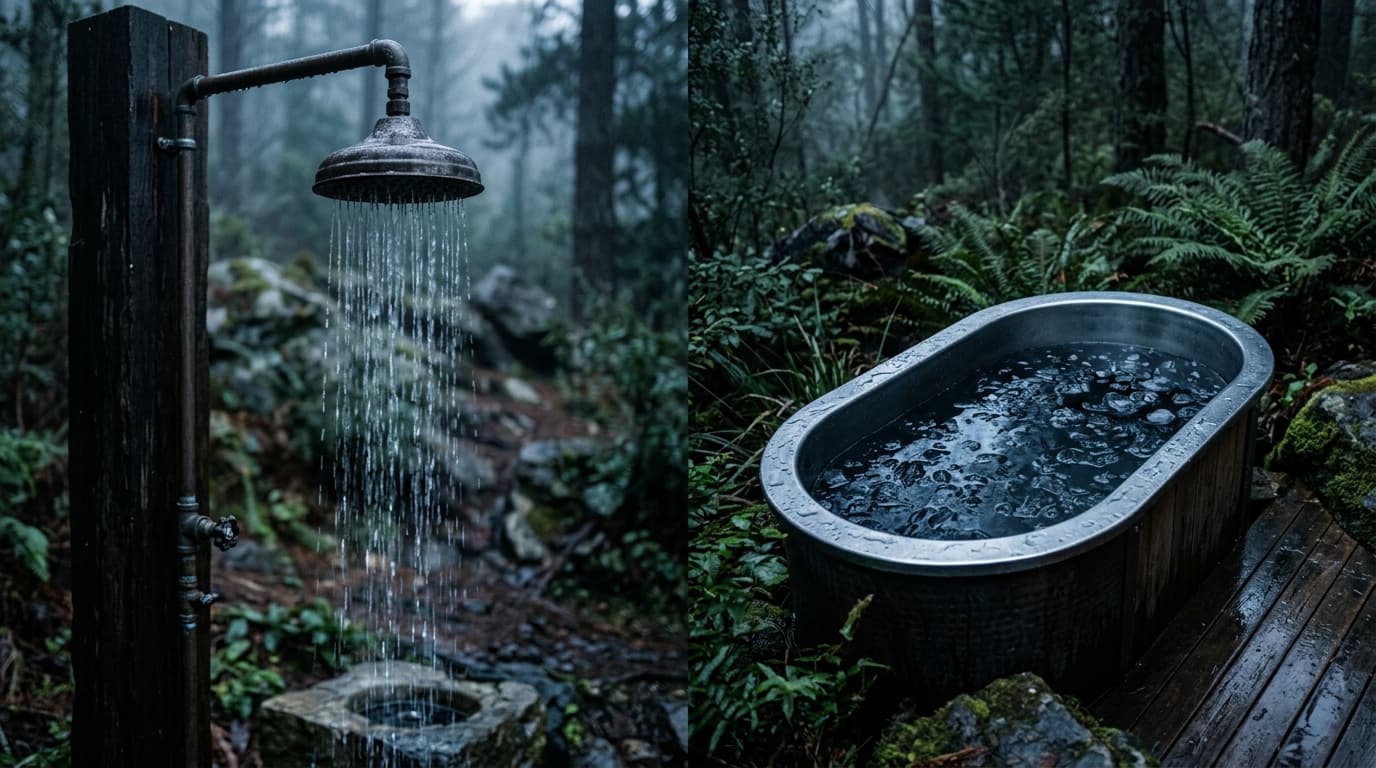
Cold plunge vs cold shower, compared honestly. When a cold shower is genuinely enough, what full immersion adds, and who should just start with showers.
Comparison
Quick answer: A cold shower and a cold plunge are not the same tool. A cold shower is free, easy, and genuinely enough for a lot of people, but you cannot control the temperature well or fully immerse. A cold plunge adds full-body immersion, a set temperature you can repeat, and the ability to stay in for a chosen time. If you have never done cold exposure, start with showers before you spend anything.
Best for
Someone deciding whether a plunge is worth buying, or whether a cold shower already covers it.
Wrong fit
People who already plunge and are comparing specific tubs or chillers.
Tradeoff
A cold shower costs nothing and asks nothing to install, but it cannot give you the controlled temperature and full immersion a plunge does.
A cold shower and a cold plunge sound like the same idea, and they are not. A cold shower sprays cold water on parts of you for as long as you can stand it. A cold plunge surrounds your whole body in water held at a set temperature, so you can get in, breathe, and stay for a chosen number of minutes. Those are different experiences, and for a first-week researcher the honest headline is this: you should almost certainly start with cold showers before you spend a dollar on a plunge.
That is not a knock on plunges. It is the cheapest way to learn whether you even like cold exposure. If you finish your shower on cold for two weeks and look forward to it, that tells you far more than any review can. If you dread it every morning, you just saved yourself thousands. This guide lays out what each one actually gives you, when a shower is genuinely enough, and who should skip straight to a tub.
If you have a heart condition, high blood pressure, or you are pregnant, read when not to cold plunge first. The cold shock response is real in both a shower and a plunge.
Quick Answer
Neither is "better." They do different jobs, and a shower is the right first move for most people.
Factor
Cold shower
Cold plunge
Cost
Free, you already have one
$100 to $10,000+
Temperature control
Whatever comes out of the tap
Set and repeatable
Immersion
Partial, water hits one side
Full body, all at once
Duration
Hard to sustain
Easy to stay a set time
Setup effort
None
Ranges from ice runs to a plumbed chiller
Best for
Testing the habit, daily convenience
People who want a controlled, repeatable session
What a cold shower gives you (and what it does not)
A cold shower is the most underrated tool in this whole conversation because it is free and already installed. You can start tonight. For building the daily habit of choosing discomfort and breathing through it, a cold shower does a real job. Many people get most of what they want from cold exposure and never need more.
But be clear about its limits, because they are the exact reasons plunges exist:
You cannot control the temperature. Your cold tap is whatever the incoming water happens to be, and that swings with your region and the season. Summer tap water in a warm climate might only reach the mid-60s Fahrenheit (high teens Celsius), which is barely cold. Winter tap in a cold climate can be genuinely frigid. You are at the mercy of the pipes, and you cannot repeat the same session two days running.
You are only half in. A shower hits one surface of your body at a time. You turn, you shift, one shoulder is cold while the other warms up. That is a different stimulus from being surrounded on all sides at once.
It is hard to stay in. Standing under cold spray is its own kind of unpleasant, and most people cut it short. A plunge, oddly, is often easier to stay in once you are past the first 30 seconds, because the water is still and even.
None of that makes a shower useless. It makes it a great starting tool with a ceiling.
What a cold plunge adds
A plunge is what you buy when the shower's limits start to matter to you. Three things change:
Full immersion. Your whole body goes under at once, up to the neck. It is a more complete and more intense version of cold exposure, and the still water around you feels different from moving spray. For a lot of people this is the entire point.
A controlled, repeatable temperature. This is the big one. A plunge, especially a powered one with a chiller, holds a set temperature so today's session matches yesterday's. You decide whether the water is 55°F (13°C) or 48°F (9°C) and it stays there. That control is impossible in a shower, and it is what lets you actually dial in what works for you. The cold plunge temperature guide covers the ranges.
Chosen duration. Because the water is still and even, most people find it easier to settle in and stay a deliberate one to three minutes. You are not fighting a stream, you are sitting in cold water and breathing.
The tradeoff is obvious: all of that costs money and effort. A plunge is anywhere from a $150 stock tank you fill with ice to a $6,000 powered unit with a chiller, a dedicated outlet, and monthly running costs the product page skips. Before you assume the sticker is the bill, read the real cost of a cold plunge.
Who should just start with showers
Be honest with yourself about which of these is you.
Start with cold showers if you:
Have never done cold exposure and do not yet know if you like it. This is most people. Two weeks of cold-finish showers is the best $0 test there is.
Want the daily convenience of something already in your bathroom, with no ice, no setup, no maintenance.
Are on a tight budget and would resent an expensive tub if you did not use it.
Live somewhere with genuinely cold tap water for part of the year, which gets you closer to plunge temperatures for free.
Consider moving up to a plunge if you:
Have kept a cold shower habit for a month or more and want a stronger, full-body version.
Are frustrated that you cannot control or repeat the temperature, especially in summer when the tap is barely cool.
Want a deliberate few minutes of stillness rather than a rushed blast, which the immersion supports better.
Are pairing it with a sauna for contrast therapy, where a controlled plunge is easier to build a routine around. See the sauna and cold plunge routine.
There is no shame in staying with showers forever. There is also no rule that says you have to. The point is to earn the upgrade with a proven habit, not to buy it hoping the habit follows.
The smart path from shower to plunge
If you think you will eventually want a plunge, do it in this order and you will rarely regret it:
Cold-finish your showers for two weeks. Free. This is the real test.
If you like it, try a cold bath or a cheap stock tank with ice. Around $100 to $300 gets you real immersion so you can feel the difference from a shower.
Only then decide on a chiller or a powered plunge. Once you know you use it, and how cold you actually like it, you can spend on convenience with confidence. The cold plunge for beginners guide walks through the three buying lanes.
Every step proves the habit before the next step costs more. That is the whole trick.
Frequently Asked Questions
Is a cold shower as good as a cold plunge?
For getting started and building the habit, a cold shower does a real job and is genuinely enough for a lot of people. What it cannot do is control the temperature or fully immerse you, which is exactly what a plunge adds. Different tools, and a shower is the right first one for most people.
Are cold showers cold enough to count?
It depends on your tap. Cold tap water ranges roughly from the mid-60s Fahrenheit (high teens Celsius) in a warm climate summer to genuinely frigid in a cold-climate winter. In colder months and colder regions, a cold shower gets close to plunge temperatures. In warm weather, your tap may be too mild to feel like much, which is one reason people move to a chilled plunge.
Should a beginner buy a plunge or start with showers?
Start with showers. It is the free way to find out whether you like cold exposure at all before spending anything. If you keep the habit for a month and want more, then a plunge makes sense. Buying first and hoping the habit follows is how tubs end up unused in garages.
What does a cold plunge do that a shower cannot?
Three things: full-body immersion instead of a one-sided spray, a set temperature you can repeat day to day, and the ability to settle in for a chosen duration. If none of those matter to you yet, a shower is fine. When they start to matter, that is your signal to upgrade.
Is either one risky?
The cold shock response is real in both, and cold water has genuine contraindications for people with heart conditions, high blood pressure, or during pregnancy. A plunge with deep water adds the rule of never going in alone. Read when not to cold plunge and talk to your doctor if you have any doubt.
These guides are built from manufacturer documentation, public specifications, primary research where health claims matter, and repeated buyer questions that show up in real ownership and setup decisions.
Manufacturer responses can clarify pricing bands, warranty terms, support footprint, or common mistakes. They do not move a page up the shortlist on their own.