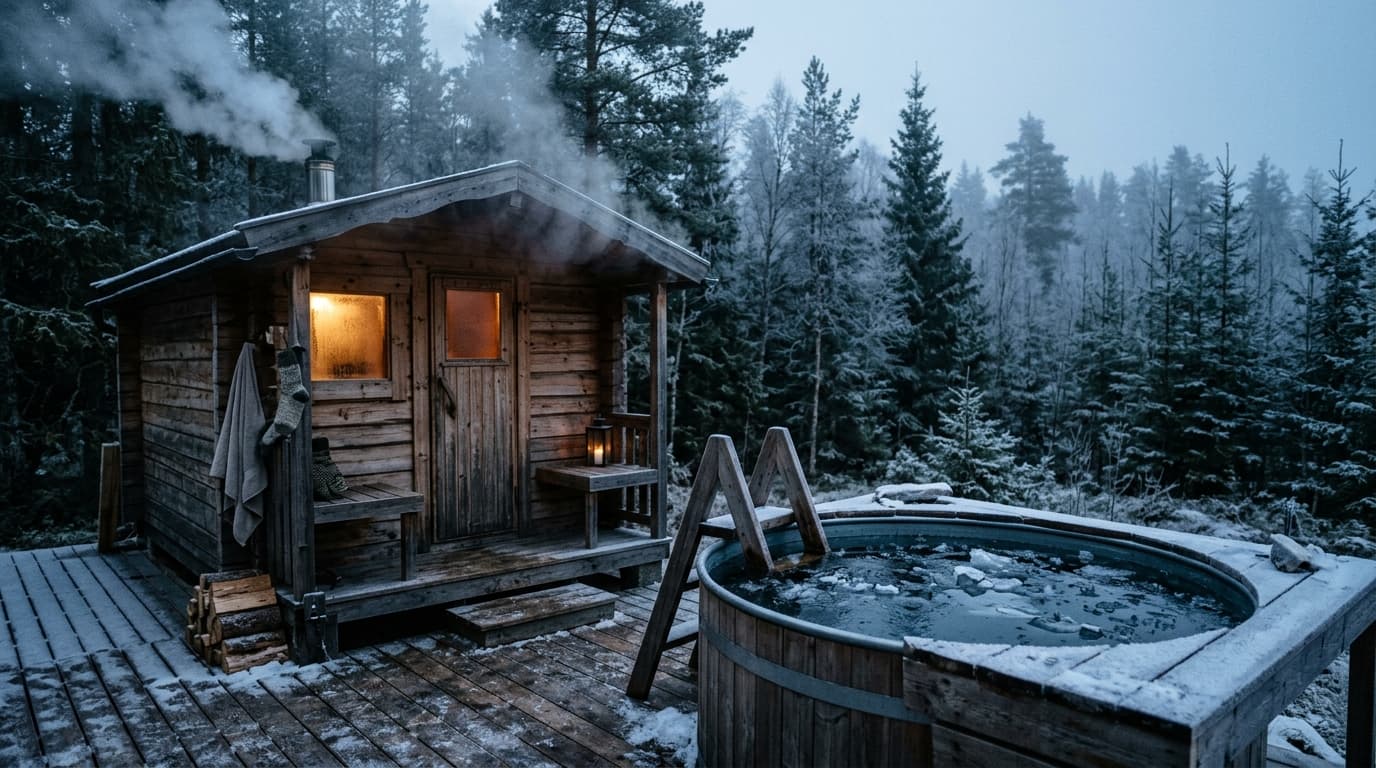
The cold-plunge side of contrast therapy: what setup you need after a sauna, how to make the hot-to-cold switch safely, and when a chiller is overkill.
Plunge Type
Quick answer: For contrast therapy you go hot first, then cold: warm through in the sauna, then get into cold water for one to three minutes, and repeat for a few rounds if you like. The cold half is the part that needs planning, and here is the honest part most sites skip: if you already own a sauna, you often do not need a $6,000 chilled plunge to do contrast well. A cold shower, a hose, or a $150 stock tank next to the sauna does the job. A chiller earns its place only if you want a consistent, set-temperature plunge on demand.
Best for
Sauna owners or buyers who want to add the cold half and are deciding how much cold setup they actually need.
Wrong fit
People with a cardiac condition or uncontrolled blood pressure, for whom the hot-to-cold swing is a real risk. Check with a doctor first.
Tradeoff
A cheap cold source (shower, hose, stock tank) makes contrast nearly free but the temperature drifts. A chilled plunge holds a set temperature on demand but costs thousands and adds a chiller to maintain.
The sauna is the easy half. Almost anyone can sit in heat. The cold plunge is the half people overthink and overspend on, so this guide is the cold side of contrast therapy: what the cold actually adds, how to switch from hot to cold without hurting yourself, and, the question that saves the most money, how much cold setup you really need.
If you want the exact hot-cold sequence, rounds, and timing from the sauna side, our sister site sauna.guide has the canonical version in its contrast therapy sequence guide. This page stays on the cold plunge: the setup and the safety.
Quick Answer
Hot first, then cold. Warm through in the sauna, then get into cold water for one to three minutes, and repeat for a few rounds if you want. The cold half is the part that needs planning, and here is the honest part: if you already own a sauna, you often do not need a $6,000 chilled plunge to do contrast well. A cold shower, a hose, or a $150 stock tank next to the sauna does the job. A chiller earns its place only when you want a consistent, set-temperature plunge on demand.
Cold source for contrast
Rough cost
Holds temperature?
Best for
Cold shower or garden hose
$0
No
Testing contrast, warm climates
Stock tank + ice
$150-$400
Only while ice lasts
Cheapest real plunge next to a sauna
Barrel + separate chiller
$1,500-$3,000
Yes
Set-and-forget on a budget
Powered chilled plunge
$4,000-$8,000+
Yes
Daily use, cold climates, on-demand
What the cold half actually does
Heat opens your blood vessels. Cold clamps them down. Contrast therapy is the back and forth between the two, and the felt effect is real: you finish alert, flushed, and loose. That part is not marketing.
The part that is marketing is the precise percentages. You will see claims that contrast "boosts metabolism 350%" or "triples immunity." The honest read of the evidence is that cold water immersion reliably improves mood and perceived recovery and the subjective contrast effect is strong, but the big metabolic and immune numbers are shaky, often from tiny studies, and should not drive a purchase. Buy the cold plunge because you will use it and it feels good, not because of a stat on a product page.
One evidence-based caution worth knowing: cold water immediately after resistance training can blunt some muscle-growth signalling. If your goal is maximum hypertrophy, do the cold on rest days or well after lifting. See our note in the beginner's guide.
Hot then cold, and end where you like
The standard order is hot then cold, because the cold is the more intense stimulus and finishing cold leaves you alert. A simple session: 10 to 15 minutes in the sauna, 1 to 3 minutes cold, repeated 2 to 3 rounds.
Whether you "must" end on cold or end on hot is more folklore than settled science. End on cold if you want to feel sharp afterwards; end on warm if you want to sleep soon after. The sauna-side sequence guide linked above covers the full round-by-round protocol. For the cold temperatures specifically, see our cold plunge temperature guide.
The safety that matters most: hot to cold
This is the one section to not skim. Going straight from deep sauna heat into cold water is the highest-stress moment in all of contrast therapy. Your heart rate and blood pressure swing hard as vessels slam from wide open to clamped shut. For a healthy person that swing is tolerable and part of the point. For some people it is dangerous.
Do not do hot-to-cold contrast, or talk to a doctor first, if you have a cardiac condition, uncontrolled or high blood pressure, are pregnant, or are on medication that affects heart rate or blood pressure. The cold shock response causes an involuntary gasp and a spike in cardiac load in the first seconds, which is exactly when you are moving from hot to cold. Full contraindications are in our when not to cold plunge guide, and the practical safety rules, never alone, controlled entry, breathing, are in the cold plunge safety guide.
Two practical rules for the switch: step, do not jump, and never do the cold half alone if you have pushed the sauna hard.
What cold setup you actually need
Here is where most contrast content quietly steers you toward the most expensive tub. The honest answer depends on three things: your climate, how often you will use it, and whether you want the temperature handled for you.
Just testing, or warm climate: a cold shower or a garden hose after the sauna is genuinely enough to start. Cost: nothing. Prove you will keep doing it before you spend.
You want a real plunge on a budget: a stock tank next to the sauna, topped with ice, is the cheapest real cold plunge. It drifts in temperature, but for post-sauna contrast that is fine.
Daily use or a cold house: a powered chilled plunge holds temperature on demand and lasts. Worth it if you will use it most days.
Run your real all-in number, including the chiller, the outlet, and the water care, in the cost calculator before you decide. And if you do want a fixed plunge, compare the credible names in the brand directory.
Frequently Asked Questions
Do I need a chiller for contrast therapy if I have a sauna?
No, not to start. The sauna already provides the hot half. For the cold half, a cold shower, hose, or an ice-topped stock tank works. A chiller only pays off when you want a consistent temperature without hauling ice, or you plunge most days.
Hot then cold, or cold then hot?
Hot then cold is standard, because the cold is the stronger stimulus and finishing cold leaves you alert. Ending on warm is fine if you want to wind down for sleep. Order matters less than most sites claim.
How long in the cold after a sauna?
One to three minutes is plenty for most people. Longer is not better, and it raises the cardiovascular stress of the hot-to-cold swing. Start at the short end.
Is contrast therapy dangerous?
The hot-to-cold switch is the highest-stress moment and is genuinely risky for people with heart conditions, uncontrolled blood pressure, or during pregnancy. For healthy people it is generally well tolerated. Read when not to cold plunge and check with a doctor if unsure.
How cold should the plunge be for contrast?
The usual range is roughly 45 to 55°F (7 to 13°C) to start, colder as you adapt. Details in the temperature guide.
Sources
University of Portsmouth cold-water research; Tipton et al., on the cold shock response and cardiovascular load
Evidence caution on post-exercise cold and hypertrophy: multiple resistance-training studies (effect is real but context-specific)
Methodology
These guides are built from manufacturer documentation, public specifications, primary research where health claims matter, and repeated buyer questions that show up in real ownership and setup decisions.
Manufacturer responses can clarify pricing bands, warranty terms, support footprint, or common mistakes. They do not move a page up the shortlist on their own.