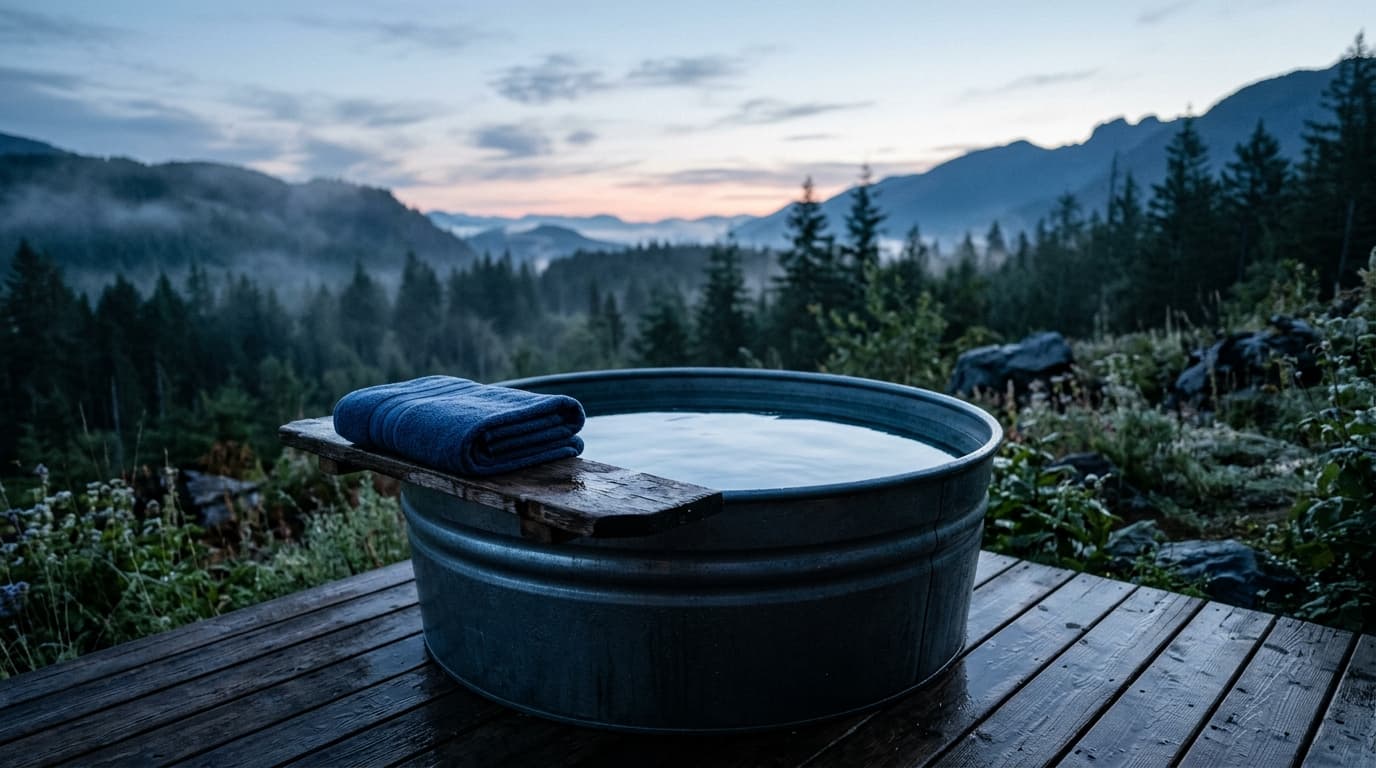
New to cold plunges? What they are, the three buying lanes, and why to test cold exposure cheap before you spend $6,000 on a tub.
Plunge Type
Quick answer: A cold plunge is a tub of cold water, usually 45 to 60 degrees Fahrenheit (7 to 16 Celsius), that you sit in for a few minutes. You do not need to spend thousands to start. Test the habit in a cheap stock tank or even a cold bath first, then decide between a powered plunge, an unpowered tub, or a portable system once you know you will use it.
Best for
Someone brand new to cold water who wants the plain version before spending any money.
Wrong fit
Buyers who already plunge regularly and are down to picking between two specific brands.
Tradeoff
The convenient plug-and-play tubs cost the most, and the cheapest setups ask the most of you in daily effort.
A cold plunge is just a tub of cold water you sit in on purpose. Most people keep it somewhere between 45 and 60 degrees Fahrenheit (7 to 16 Celsius) and stay in for one to five minutes. That is the whole thing. The rest of this guide is about not overspending before you know whether you will actually stick with it.
Here is the part nobody selling you a tub wants to lead with: you might not need to spend $6,000. Plenty of people who love cold plunging started in a $150 stock tank with bags of ice, decided they liked it, and only then bought the nice unit. Some never upgrade at all. So before we talk about which lane fits you, read the honest version first. If you have a heart condition, high blood pressure, or you are pregnant, cold water is not a casual decision. Start with when not to cold plunge before anything else.
Quick Answer
A cold plunge is cold water immersion at home, usually 45 to 60°F (7 to 16°C), for one to five minutes. There are three ways to buy in, and the right one depends on your budget and how much daily effort you want to trade away.
Lane
Price range
What it is
Best for
Powered (with chiller)
$3,000 to $10,000+
Tub with a built-in cooler that holds your temperature
People who want to press a button and get in
Unpowered tub or barrel
$100 to $1,500
A tub you fill and chill with ice or a separate chiller
People testing the habit or happy to do some work
Portable / travel
$2,495 to $2,990
Folding or compact systems with a chiller included
Small spaces, renters, people who travel
The honest starting move for most beginners is the cheap end of that table, not the top. Test first, then buy the convenient version once you know it sticks.
What a cold plunge actually does for a beginner
Set expectations before you set a budget. Cold water immersion is popular for how it makes people feel after: alert, clear-headed, and oddly calm once the shock passes. A lot of the daily appeal is that simple.
The science here is younger and more contested than sauna science, so we say that plainly. There is real research on cold exposure and things like mood and inflammation, but a lot of the bigger claims you see on social media run ahead of the evidence. You do not need to believe any of the hype to get started. You need to know it is cold, it is uncomfortable for the first 30 seconds, and most people adjust faster than they expect.
What matters for a first-week researcher is this: the benefit does not scale with how much you spend. A $6,000 tub and a $150 stock tank hold the same cold water. What you pay for at the top end is convenience, not a better result.
The three buying lanes, one paragraph each
Powered plunges with a chiller ($3,000 to $10,000+). These are the tubs you have seen on podcasts: a self-contained unit with a built-in cooling system that holds your target temperature all day, filters the water, and lets you get in whenever you want. Brands like Plunge, Sun Home, and Renu Therapy live here. The appeal is real. No ice runs, no hauling, no guessing. The catch is the price and the hidden costs the product page skips: a dedicated outdoor GFCI outlet, water treatment, and $10 to $40 a month in electricity. This is the plug-and-play lane, and it is worth it if you value the convenience over the money. See the real cost of a cold plunge before you assume the sticker price is the bill.
Unpowered tubs and barrels ($100 to $1,500). This is a tub with no cooling of its own. You either add ice by hand or buy a chiller separately. Ice Barrel, stock tanks, and the pile of look-alike inflatable tubs are all here. The upside is you can start for very little money. The downside is the daily effort. Ice is not free, and a stock tank in July with no chiller is a warm bath by afternoon. This lane is right for testers and for handy people who do not mind the routine. If you are drawn to it, the chest freezer cold plunge and stock tank routes are worth reading, safety caveats included.
Portable and travel systems ($2,495 to $2,990). These fold up, pack down, or take up less patio than a full tub. Inergize is the name to know, with chiller-included bundles from $2,495 (Pro Pod) to $2,990 (Elite Tub). The other name you may still see recommended, Edge Theory Labs, went out of business, so skip it unless you are hunting a heavily discounted used unit with no warranty. Portable makes sense for renters, small yards, and people who move around. You pay a premium for the compact form. Good lane if space or portability is your real constraint.
How to start cheap and test first
The single best thing a beginner can do is spend almost nothing at first. Cold exposure is a habit, and habits are cheap to test and expensive to guess wrong.
Try a cold bath or cold shower this week. Fill a bathtub with cold tap water and add ice if you have it, or just finish your shower on cold. This tells you, for zero dollars, whether you can tolerate the cold and whether you look forward to it. Read cold plunge vs cold shower for what the shower does and does not give you.
If you like it, get a stock tank. A livestock stock tank runs about $100 to $300. Add ice for now. This is a real cold plunge for the price of a nice dinner. You will learn your comfortable temperature and how long you actually stay in.
Only then decide on a chiller or a powered unit. After a month of using a cheap setup, you will know if the daily ice routine annoys you enough to pay for automation. If it does, that is when a chiller or a full powered plunge earns its price. If it does not, you just saved thousands.
Testing first is not the cautious, boring option. It is the smart one. The people with $5,000 tubs gathering dust in the garage are almost always the ones who skipped this step.
The honest budget talk
You do not need a $6,000 plunge to get everything cold water offers. You need cold water, a way to keep it cold, and the discipline to actually use it. That is available at every price point.
Spend more only to buy back effort. A powered plunge is worth it if the convenience is what keeps you consistent, and consistency is the only thing that matters. But do not confuse the price tag with the payoff. A cheap setup you use four times a week beats an expensive one you use twice a month, every single time.
When you are ready to compare real numbers instead of brochure numbers, the real cost of a cold plunge breaks down the chiller, the electrical, and the water care that the product pages leave out.
Frequently Asked Questions
How cold should a beginner's cold plunge be?
Start warmer than you think. Somewhere around 55 to 60°F (13 to 16°C) is plenty cold for a first-timer and still gives you the full experience. You can work colder over weeks as you get comfortable. Colder is not automatically better, and going too cold too soon is how beginners get scared off. The cold plunge temperature guide has the full ranges.
How long should I stay in as a beginner?
For your first few sessions, 30 seconds to one minute is a complete session. Build toward one to three minutes as it gets easier. There is no prize for staying in longer, and pushing past your limit adds risk without adding benefit.
Do I really need a chiller?
Not to start. You can use ice in a stock tank or tub for weeks and learn everything you need to know. A chiller is a convenience upgrade you buy once the daily ice routine gets old. Read the chest freezer cold plunge route if you want a cheaper path to always-cold water, safety caveats and all.
Is it safe to just start on my own?
For most healthy adults, easing into cold water is manageable, but cold exposure has real contraindications. Heart conditions, high or unmanaged blood pressure, pregnancy, and certain medications all change the picture, and the cold shock response is real. Read when not to cold plunge first, never plunge alone in deep water, and talk to your doctor if you have any doubt. Starting after 60? The cold plunge for seniors guide covers the extra margin age deserves.
What is the cheapest way to try cold plunging?
A cold bath tonight, for free. After that, a stock tank with ice for around $100 to $300. Neither asks you to commit thousands before you know whether the habit sticks.
Should I just do cryotherapy instead of buying a cold plunge?
Only if you want to pay per visit forever. A cryotherapy session runs $40 to $100 a time, which adds up fast if you go regularly, while a cold plunge is a one-time cost that gets cheap to run after that. The evidence also does not show cryotherapy clearly beats cold water immersion. See cold plunge vs cryotherapy for the full cost and safety comparison.
These guides are built from manufacturer documentation, public specifications, primary research where health claims matter, and repeated buyer questions that show up in real ownership and setup decisions.
Manufacturer responses can clarify pricing bands, warranty terms, support footprint, or common mistakes. They do not move a page up the shortlist on their own.