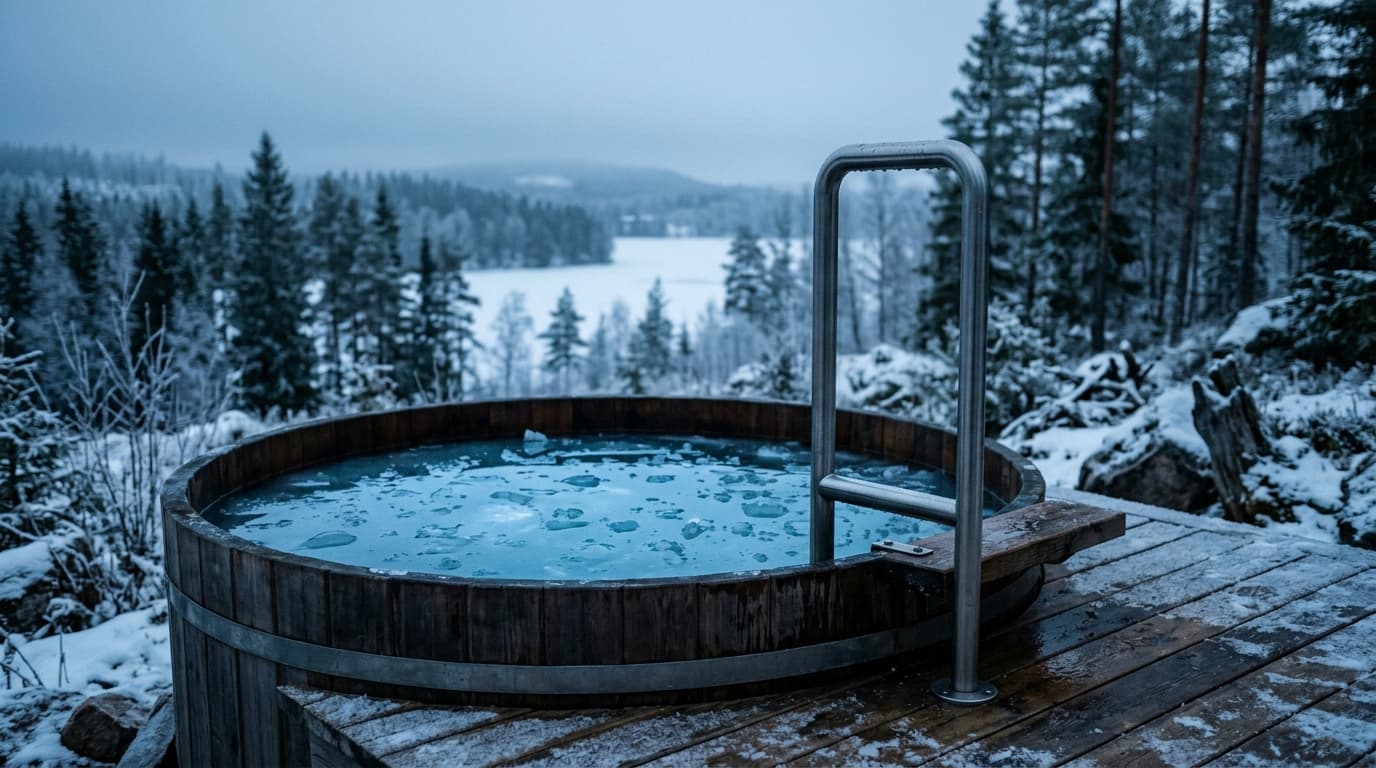
How to cold plunge safely: never alone, entry technique, breathing through cold shock, beginner time and temperature limits, and when to stop.
Plunge Type
Quick answer: Plunge safely by never going in alone, entering slowly instead of jumping, and controlling your breathing through the first two minutes of cold shock. Beginners can start around 50 to 60F (10 to 15C) for one to three minutes, keep the head above water, and never submerge. Warm up gradually afterward and get out at the first sign of dizziness, numbness, or a racing heart.
Best for
Healthy adults who are cleared to cold plunge and want the practical rules for entry, breathing, time, temperature, and rewarming.
Wrong fit
Anyone with a heart condition, high blood pressure, pregnancy, or a relevant medication, who should read the contraindications page and see a doctor first.
Tradeoff
Colder and longer is not safer or better. The gains come from consistent, short, controlled exposure, not from pushing your limits.
Most cold plunge injuries are not from the cold itself. They come from three avoidable mistakes: getting in alone, holding your breath wrong through the first shock, and treating longer and colder as better. Get those three right and cold plunging is, for a healthy and cleared adult, a low-drama practice.
This guide covers the practical rules: never alone, how to enter, how to breathe through the cold shock response, beginner time and temperature limits, how to warm up after, and when to stop. It assumes you have already read the contraindications guide and that you are healthy and cleared. If you have a heart condition, high blood pressure, a pregnancy, or a relevant medication, stop here and talk to a doctor first. And if you are around 60 or older, the seniors guide adds the age-specific adjustments to everything below.
MEDICAL DISCLAIMER: This is general information, not medical advice. Cold water immersion is a real physiological stressor. If you have any health condition, get clearance before you start.
Quick Answer: The Safe-Practice Rules
Rule
Beginner guidance
Why
Never plunge alone
Someone within earshot, every time
Fainting or a gasp underwater can be fatal alone
Enter slowly
Lower in over 20 to 30 seconds, do not jump
A slow entry blunts the cold shock response
Control breathing
Long, slow exhales for the first two minutes
The cold shock reflex makes you hyperventilate
Keep the head up
Never submerge, sit fully upright
Protects against the involuntary gasp reflex
Start mild
Around 50 to 60F (10 to 15C)
Colder is not safer, and adds no beginner benefit
Keep it short
One to three minutes early on
The first minutes give you most of the effect
Warm up gradually
Move, dry off, add layers
Your core keeps cooling for minutes after you exit
Stop on warning signs
Dizziness, numbness, racing heart
These mean get out now, not push through
Rule One: Never Plunge Alone
This is the rule that saves lives, so it goes first. The cold shock response, described by cold water immersion researchers, includes an involuntary gasp and fast, uncontrollable breathing in the first seconds of immersion. If your face is underwater during that gasp, you can inhale water. Separately, the blood pressure swings of a plunge can cause a faint. Alone, either one turns a manageable moment into a drowning.
So every session, have another adult within earshot who knows you are in the water. This matters most when you are new, when the water is very cold, or when you are trying a longer session than usual. A home plunge where you can stand up is safer than open water, but "safer" is not "safe alone."
Get In Slowly, Do Not Jump
Jumping or dropping in triggers the full cold shock response at once. Lowering yourself in over 20 to 30 seconds gives your skin and breathing a chance to adjust, which is why cold water safety guidance consistently recommends a controlled entry over a plunge.
A workable order for a home tub:
Feet and lower legs first. Pause and breathe.
Sit down so the water reaches your waist. Pause and breathe.
Lower to chest level, keeping shoulders and head above the surface.
Never dunk your head. Keep it up the entire time.
The first 30 seconds feel the worst. If you get through them with slow breathing, the rest of the session is usually calm.
Breathing Through the Cold Shock Response
The cold makes you want to gasp and pant. Your job is to override that with slow, deliberate breathing. The pattern most cold water coaches teach is simple: breathe in through the nose, then a long, slow exhale through the mouth, making the out-breath longer than the in-breath. Keep it going for the first minute or two until the panic signal fades.
Two cautions here. Do not do heavy breath-hold or hyperventilation drills before or during a plunge, and never combine breath-holding with submersion. Forceful hyperventilation followed by going underwater is linked to shallow-water blackout, a loss of consciousness from low blood carbon dioxide. Breathing for a cold plunge is about staying calm and staying above water, not about breath-hold performance.
Time Limits for Beginners
More time is not more benefit, and it raises the risk. A realistic beginner progression:
First sessions: 1 to 2 minutes. Getting in and staying calm is the whole goal.
After a couple of weeks: 2 to 3 minutes if it feels controlled.
Experienced and cleared: many people cap regular sessions around 3 to 5 minutes.
There is no safety reason to sit in cold water for 10 or 15 minutes, and doing so raises the risk of a real drop in core temperature. Watch the clock rather than your ego. If you are shivering hard, slurring, or losing dexterity in your hands, you have stayed too long, and that is a sign to shorten future sessions, not to tough it out.
Temperature Limits for Beginners
Cold plunge temperatures range widely, from around 39F (4C) at the extreme to a milder 55 to 60F (13 to 15C). Colder water is not safer and gives a beginner no extra benefit worth the added risk. Start warmer and let your tolerance build.
Water temperature
Who it suits
Note
55 to 60F (13 to 15C)
Complete beginners
Plenty cold to start, easier to control breathing
50 to 55F (10 to 13C)
After a few weeks
A common regular range
39 to 50F (4 to 10C)
Experienced, cleared
Colder means shorter sessions, more caution
The colder the water, the shorter and more careful the session should be, and the more the never-alone rule matters. If you own a chiller, resist the urge to set the lowest number the machine allows just because it can. If you are still weighing setups and running costs, the real cost of a cold plunge covers chillers and water care.
Warming Up After, and Why Not to Rush the Hot Shower
Here is the part beginners skip. When you get out, your core temperature can keep falling for several minutes as cold blood from your arms and legs returns to the center of your body. Cold water swimmers call this the afterdrop, and it is why the minutes right after a plunge are when some people feel worst or faint.
Warm up gradually:
Dry off and get dressed quickly, warm layers, a hat, and dry socks.
Move gently. A short walk or light movement helps your body rewarm from the inside.
Have a warm, not scalding, drink.
Do not jump straight into a very hot shower or sauna. Rapid heat opens your blood vessels fast, which can drop your blood pressure and make you lightheaded right when your core is still cooling. If you pair cold with heat, let a few minutes pass and keep the heat moderate.
Give yourself 10 to 20 minutes of easy rewarming before driving or anything that needs full coordination.
Warning Signs to Stop
Get out at once if you notice any of these:
Warning sign
What it means
Dizziness or lightheadedness
Blood pressure dropping
Chest pain or pressure
Possible cardiac event, treat as an emergency
A racing or irregular heartbeat
Cardiovascular strain
Confusion or slurred speech
Core temperature falling too far
Loss of dexterity in the hands
Cold incapacitation, you have stayed too long
An urge to gasp you cannot control
The cold shock response is winning, get your head clear
Cutting a session short is never a failure. Pushing through a warning sign is how a good habit becomes an accident.
A Simple First-Session Plan
Have someone with you. Confirm they know you are getting in.
Water around 55 to 60F (13 to 15C). Timer set for 1 minute.
Enter slowly, feet first, over 20 to 30 seconds.
Sit to chest level, head up, and start long slow exhales.
Stay calm for the minute. Get out if any warning sign shows up.
Next time, add time or lower the temperature only if the last session felt easy and controlled.
If you want the fuller orientation to protocols and gear, read the beginners guide. If you are not sure cold plunging is right for your health, go back to when not to cold plunge first.
Frequently asked questions
How long should a beginner stay in a cold plunge?
Start with one to two minutes. The first minutes give you most of the effect, and longer sessions mainly add risk, not benefit. Build to two or three minutes over a few weeks only if it feels calm and controlled. If you are shivering hard or losing feeling in your hands, you have stayed too long. Watch a timer rather than trying to set a personal record.
What temperature should I set my cold plunge?
Beginners can start around 55 to 60F (13 to 15C), which is plenty cold and makes it easier to control your breathing. After a few weeks, many people settle into 50 to 55F (10 to 13C). Colder water down toward 39F (4C) is for experienced, cleared users and calls for shorter, more careful sessions. Colder is not safer and gives a beginner no extra benefit worth the risk.
How do I stop gasping when I get in?
Get in slowly rather than jumping, and breathe with long, slow exhales, making the out-breath longer than the in-breath. Keep that going for the first minute or two until the panic reflex fades. Do not do forceful hyperventilation or breath-hold drills, and never combine breath-holding with putting your head underwater.
Should I take a hot shower right after?
Not immediately, and not scalding. Your core temperature keeps dropping for several minutes after you get out, an effect called afterdrop, and rushing into strong heat can drop your blood pressure and make you dizzy. Warm up gradually first: dry off, add layers, move gently, and have a warm drink. If you pair cold with heat, let a few minutes pass and keep the heat moderate.
Is it safe to cold plunge alone at home?
No, especially when you are new. The cold shock response includes an involuntary gasp, and a faint from a blood pressure swing can happen without warning. Alone with your face near water, either can be fatal. Always have another adult within earshot who knows you are in the water, keep your head above the surface, and sit fully upright.
Is daily cold plunging safe?
For a healthy, cleared adult who keeps sessions short and controlled, regular use is generally well tolerated. Consistency matters more than intensity, so short and frequent beats long and extreme. Pay attention to how you recover and warm up, and skip any day you are ill, exhausted, dehydrated, or have alcohol in your system.
Sources
Guidance and studies referenced in this article:
Tipton MJ, Collier N, Massey H, Corbett J, Harper M. "Cold water immersion: kill or cure?" Experimental Physiology, 2017.
Shattock MJ, Tipton MJ. "Autonomic conflict: a different way to die during cold water immersion?" The Journal of Physiology, 2012.
Royal National Lifeboat Institution (RNLI): cold water shock and afterdrop guidance.
National Center for Cold Water Safety: cold shock, cold incapacitation, and safe practice.
American Heart Association: cold exposure and cardiovascular stress.
Methodology
These guides are built from manufacturer documentation, public specifications, primary research where health claims matter, and repeated buyer questions that show up in real ownership and setup decisions.
Manufacturer responses can clarify pricing bands, warranty terms, support footprint, or common mistakes. They do not move a page up the shortlist on their own.
Health and safety pages are written conservatively. When the safer answer is to slow down, get medical clearance, or skip the cold entirely, that is the answer we give.