Coldplunge Guide
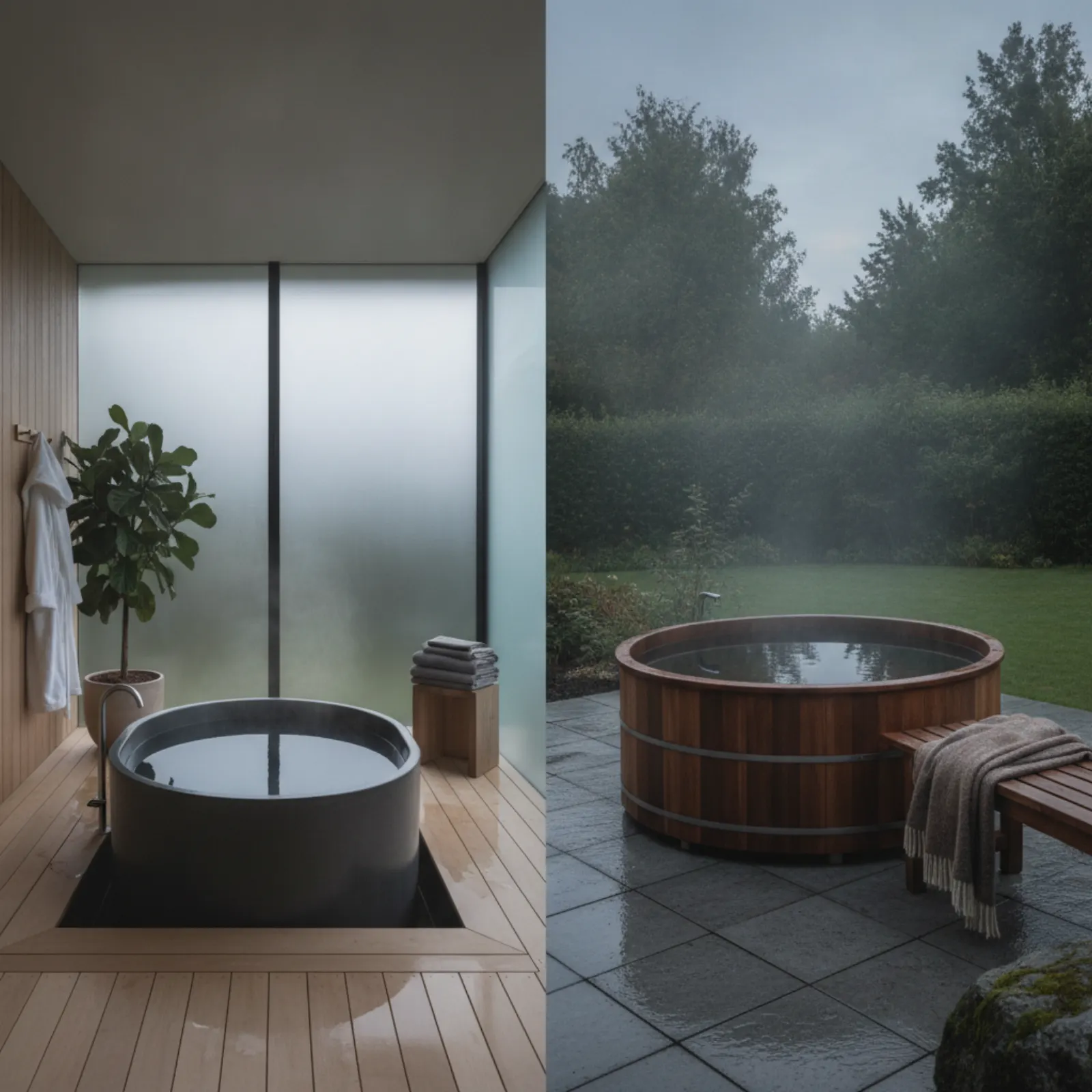
Indoor vs Outdoor Cold Plunge: The Real Setup Tradeoffs
Indoor and outdoor cold plunge setups compared by weight, condensation, GFCI power, drainage, noise, privacy, freezing risk, and daily maintenance.
Quick answer: Outdoor cold plunges are usually easier for weight, splash, and drainage. Indoor plunges can be more convenient, but they need floor capacity, condensation control, leak planning, and ventilation.
Best for
Buyers deciding where the plunge should live before choosing a model.
Wrong fit
Buyers using a commercial gym or spa instead of installing at home.
Tradeoff
Indoor placement improves privacy and daily use, but it turns water weight, leaks, condensation, and noise into house problems.
Methodology
These guides are built from manufacturer documentation, public specifications, primary research where health claims matter, and repeated buyer questions that show up in real ownership and setup decisions.
Manufacturer responses can clarify pricing bands, warranty terms, support footprint, or common mistakes. They do not move a page up the shortlist on their own.
Next Step
What to do next
Use one of these three paths. They are here to move the decision forward, not add more noise.
Want the full buyer path in your inbox? We send the short version.
Related Guides
Cold Plunge • Electricity
Cold Plunge Electricity Cost: What a Chiller Adds to Your Bill
Real chiller wattage specs, the current U.S. electricity rate, and the actual math behind a cold plunge's monthly power cost, not just another unsourced range.
Cold Plunge • Winter
Cold Plunge in Winter: What Changes When You Have a Chiller
A cold plunge chiller can freeze solid if it stops running below freezing. What Plunge, Morozko and Penguin Chillers say about winter, and whether you need one.
Cold Plunge • Buying Guide
Cold Plunge Buying Guide: What It Costs and What Matters
The complete cold plunge buying guide. Real 2026 prices, setup types, chiller sizing, GFCI, what to ask before you pay, and when to walk away.