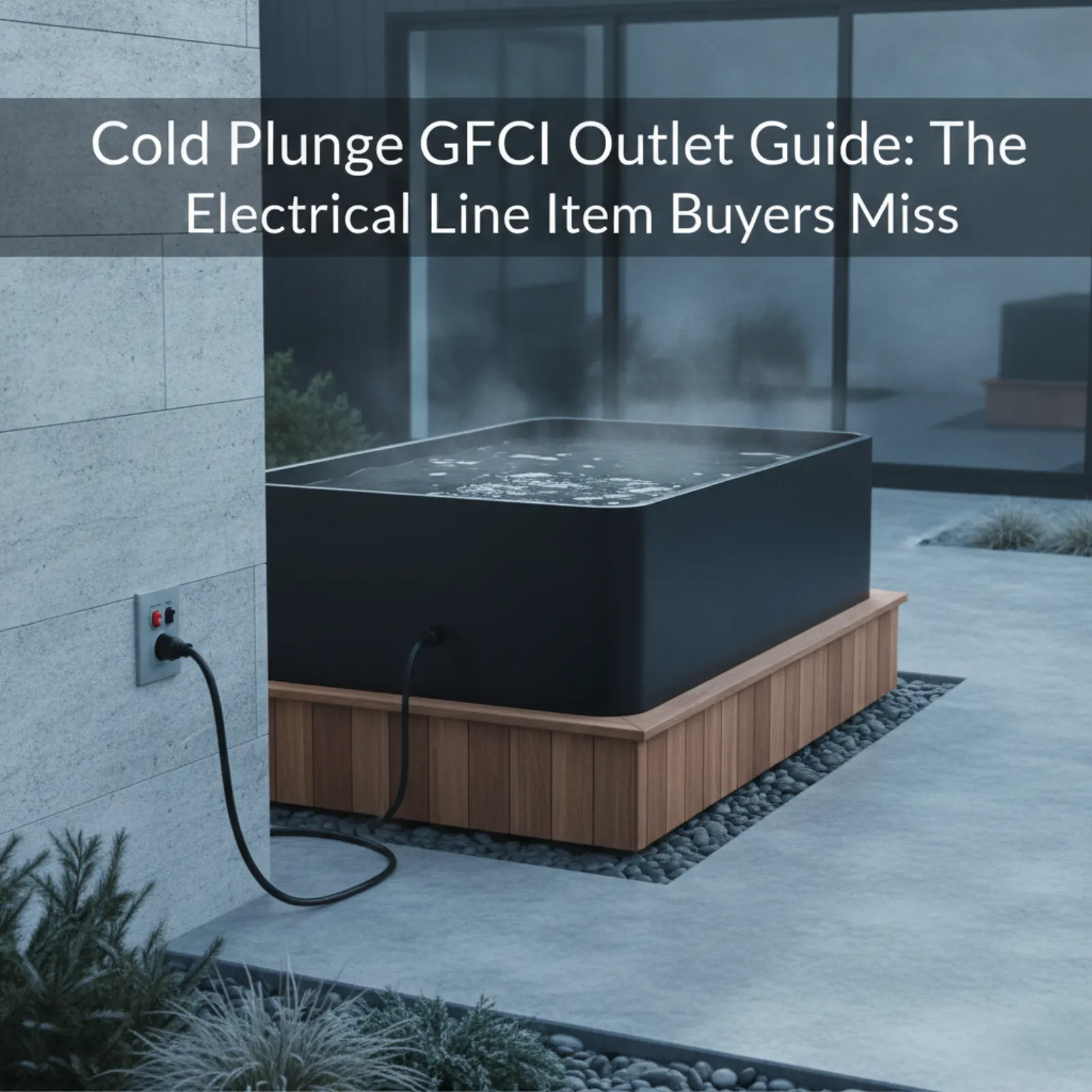
Cold Plunge GFCI Outlet Guide: The Electrical Line Item Buyers Miss

Coldplunge Guide

Updated By Anna Persson

Cold Plunge GFCI Outlet Guide: The Electrical Line Item Buyers Miss

Why a powered cold plunge needs a weatherproof GFCI-protected outlet, what to ask an electrician, and why extension cords are not a real setup plan.

Setup

Quick answer: A powered cold plunge or chiller should use a weatherproof, GFCI-protected outlet that fits the manufacturer instructions. If you need a new outdoor circuit, price it before choosing the tub.

Best for

Buyers installing a powered plunge, standalone chiller, or outdoor cold tub at home.

Wrong fit

Buyers using an unpowered stock tank with no pump, chiller, ozone, or electrical components.

Tradeoff

A proper outlet adds cost, but skipping it risks nuisance trips, warranty problems, and unsafe water-plus-electricity shortcuts.

The cold plunge product page shows the tub. It rarely shows the outlet.

If the plunge has a chiller, pump, ozone, UV, heater, or control box, the electrical setup is part of the purchase.

Quick Answer

Plan for a weatherproof, GFCI-protected outlet that matches the manufacturer's requirements. For many outdoor setups, that means asking an electrician whether you need a dedicated circuit near the plunge. Do not run a powered plunge on an extension cord as the normal plan.

What to ask before you buy

QuestionWhy it matters
What voltage and amperage does the unit require?The outlet must match the equipment
Does the manufacturer require a dedicated circuit?Shared circuits can trip or overload
Is the outlet weatherproof and GFCI-protected?Water and electricity require protection
How far is the plunge from the panel?Distance moves the install cost
Where will the cord run?Cords across patios become trip and damage risks
What voids the warranty?Some brands reject extension-cord setups

The extension cord problem

An extension cord can make a plunge look easy on day one and become the reason the setup is unsafe, unreliable, or outside warranty on day thirty. Outdoor cords get wet, stepped on, pinched, and overloaded. They also make the patio look temporary because it is temporary.

If the purchase depends on a cord across the yard, your budget is not finished.

Dedicated circuit or existing outlet?

Some buyers already have a suitable outdoor GFCI outlet in the right place. Many do not. If your chiller pulls a meaningful load or the circuit already serves other outdoor equipment, an electrician may recommend a dedicated circuit. Where the plunge lives changes this too: an indoor or outdoor placement moves the distance to the panel and the drain path.

The right answer depends on the unit, the circuit, the distance, and local code. The buyer's job is not to design the circuit. The buyer's job is to make sure the quote includes the circuit question.

Put it in the all-in number

When you compare a $6,000 powered plunge to a $1,200 tub plus a separate chiller, include the same electrical line for both if both need power. The cheapest path on the product page can shrink once you add the outlet, chiller, hoses, and water-care pieces. This is exactly the kind of hidden line that shows up in the real cost of a cold plunge, and it is even more important for DIY builds like a chest-freezer conversion where the electrical work is not optional.

The outlet is not glamorous. It is the difference between a finished install and a workaround.

Frequently Asked Questions

Do cold plunges need GFCI protection?

Powered cold plunges and chillers are used around water, so GFCI protection is the baseline safety expectation. Follow the manufacturer's installation instructions and local electrical code.

Can I use an extension cord for my cold plunge?

Do not treat an extension cord as the normal installation plan. It can create safety, tripping, weather, and warranty problems.

How much does the outlet cost?

It depends on distance, panel condition, trenching, weatherproof hardware, and local labor. Ask for a line item before you choose the final tub.

Who should install the outlet?

Use a licensed electrician where required. This is not the place to improvise.

Sources

Methodology

These guides are built from manufacturer documentation, public specifications, primary research where health claims matter, and repeated buyer questions that show up in real ownership and installation decisions.

Manufacturer responses can clarify pricing bands, warranty terms, support footprint, or common mistakes. They do not move a page up the shortlist on their own.

Health and safety pages are written conservatively. When the safer answer is to slow down, get clearance, or skip the heat, that is the answer we give.

Written by Anna PerssonReviewed by Coldplunge Guide Editorial Team, Editorial review on July 6, 2026How we reviewEditorial policy

Next Step

What to do next

Use one of these three paths. They are here to move the decision forward, not add more noise.

Want the full buyer path in your inbox? We send the short version.

Related Guides