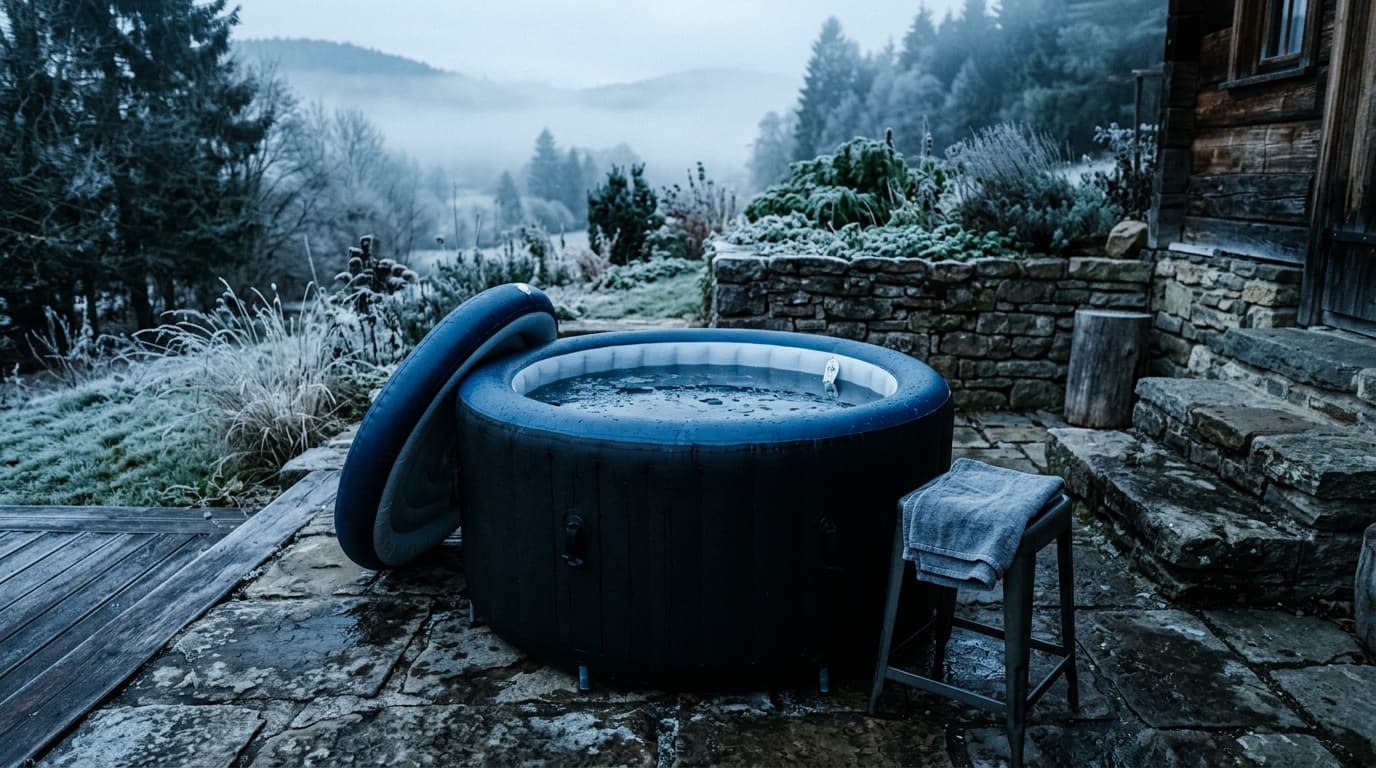
Most inflatable cold plunge tubs are the same $80-$300 white-label product with underpowered '1HP' chillers. When one is fine, and what fails.
Shortlist
Quick answer: Most inflatable cold plunge tubs sold under dozens of brand names are the same white-label product from a handful of factories, priced $80 to $300, and the '1HP chiller' often bundled with them is usually overrated and underpowered for anything but a mild climate. An inflatable is genuinely fine for testing the habit or for travel. It is a weak bet as your permanent, year-round plunge.
Best for
Buyers testing cold exposure cheaply before committing, or who need a packable tub for travel, deciding between an inflatable and a hard tub.
Wrong fit
Buyers who want a permanent daily plunge, year-round cold in a hot climate, or plug-and-play longevity.
Tradeoff
The lowest entry price and true portability, against a short lifespan, weak insulation, and chillers that cannot hold temperature in the heat.
Quick Answer
Walk any marketplace and you will see the same inflatable cold plunge tub sold under twenty different brand names for $80 to $300. That is not a coincidence. Most of them are white-label products from a small number of factories, rebranded with an invented name and a rented Instagram look. The "1HP chiller" frequently bundled or sold alongside is usually overrated on the spec sheet and underpowered in practice, especially anywhere warm.
Here is the honest split. An inflatable is a genuinely good call for two jobs: testing whether cold exposure will actually become your habit before you spend real money, and packing a plunge for travel. It is a poor choice as your permanent, everyday, year-round tub. Below is how to spot the pattern, when an inflatable is the right buy, and what tends to fail.
The cold plunge market today looks like home saunas did a few years ago: flooded with white-label gear wearing borrowed credibility. Naming which product is which is the entire reason this guide exists.
How to spot a white-label tub
You do not need insider knowledge. The tells are on the listing:
The same photos, different logo. Reverse-image-search the product shot and you will often find the identical tub under five other "brands."
A brand with no history. No founder, no address, no repair path, and a domain registered last year. The reviews all arrived in a two-month window.
Spec sheets that copy each other. Identical dimensions, identical claims, identical typos across "competing" listings, because they are the same factory product.
No real warranty or support. A 1-year warranty on paper with no one to actually call. When the tub fails in month 4, the store has moved on to the next brand name.
Price that is too good to be a coincidence. A $150 tub with a "1HP chiller included" is not undercutting a $6,000 Plunge on quality. It is a different category of product wearing similar words.
None of this makes an inflatable a scam. It makes it a commodity. The problem is buyers paying commodity products a premium price because the marketing implied a real brand behind them. For the full checklist, including documented BBB and Trustpilot cases of what these tells actually predict, see cold plunge red flags.
The "1HP chiller" problem
This is where the money and the disappointment live. A chiller's job is to pull heat out of the water faster than the environment and the pump put it back in. In a hot climate, in the sun, that is real work. Many chillers bundled with cheap tubs are labeled "1HP" but deliver a fraction of that in actual cooling, and an undersized chiller is the single most common cold plunge regret we hear.
The symptom is specific: on a warm day the chiller runs constantly and still cannot get the water below 55 to 60°F (13 to 16°C), when you wanted 45 to 50°F (7 to 10°C). It is not broken. It was never strong enough for your climate. The fix is a properly sized chiller, which often costs more than the whole tub bundle did. Before you trust any HP number on a listing, read the cold plunge chiller guide on sizing by climate.
When an inflatable is genuinely the right call
This is not a hit piece. For the right job, an inflatable is the smart, cheap answer, and saying so is how you know the rest of the guide is straight.
You are testing the habit. Cold exposure is easy to romanticize and harder to keep up in January. Spending $100 to $300 to find out whether you will actually plunge three times a week, before dropping thousands, is a genuinely good decision. Most testers who stick with it upgrade within a year anyway.
You travel and want to bring it. This is the one job hard tubs cannot do. An inflatable packs into a bag, and for a road trip or a second home it beats having nothing. If travel is the main use, look at a purpose-built portable system like Inergize, whose chiller-included bundles run $2,495 to $2,990 and are engineered for it, but a cheap inflatable covers the casual version. (Edge Theory Labs, the other portable name you will see in older roundups, went out of business, so its tubs are secondhand only with no factory warranty.)
You plunge with ice, not a chiller. If you fill with cold water and bags of ice for each session, the tub is just a well-shaped bucket and the weak chiller question disappears. An inflatable does that job fine.
Space or renting rules out anything permanent. When you cannot install a fixed tub, a deflatable one you store between uses is a reasonable compromise.
Pair the honesty with a path: if an inflatable fits your situation, buy the tub and skip the questionable bundled chiller, then add ice or a properly sized chiller separately. You will spend a little more and be far happier.
What actually fails
When these tubs disappoint, it is usually one of a short list of predictable failures:
Seams and valves leak. Inflatable walls flex, and the seams and air valves are the first to give out, often within a season of regular use. A slow leak in the insulation chamber also means the water warms faster.
Weak insulation. Thin inflatable walls lose cold quickly, so the chiller works harder and your electricity bill climbs, or the ice melts faster. This is the quiet reason the "included chiller" struggles.
The chiller quits or never performed. Either it fails outright with no support to call, or it technically works but was never sized to hold your target temperature in your climate.
UV and cold degrade the material. Sun exposure and repeated freezing cycles make cheap inflatable material brittle over time, and a cracked seam is usually the end of the tub.
No repair path. A hard tub can often be patched or serviced. When a white-label inflatable fails and the "brand" has vanished, replacement is your only option.
None of these are rare defects. They are the normal lifespan of a low-cost inflatable used hard, which is exactly why it is a testing-and-travel tool, not a ten-year purchase.
What you are really paying for at each price
Price band
What you actually get
Best used for
$80-$300 inflatable tub
Commodity white-label tub, weak or no chiller, short lifespan
Testing the habit, ice-based plunging, occasional travel
$2,495-$2,990 portable system
Purpose-built packable plunge with a real chiller (Inergize)
Frequent travelers who want it to actually work
$1,000-$1,500 hard tub, chiller separate
Durable tub like an Ice Barrel, add your own chiller
Handy buyers who want longevity for less
$3,000-$10,000+ powered plunge
Sealed build, warranty, filtration, chiller matched to the tub
A permanent daily plunge with support
Every figure is an estimate and moves with sales and bundles. The table exists to make one point: the $150 inflatable and the $6,000 plunge are not competitors on a quality curve. They are different tools. Compare an inflatable against a stock tank or an Ice Barrel plus a chiller, not against a premium unit.
How to buy one without getting burned
If an inflatable is genuinely right for your situation, buy it well:
Buy the tub, judge the chiller separately. Do not pay a premium for a bundled "1HP" chiller. Assume you will use ice or add a properly sized chiller later.
Ignore the brand name, check the return policy. Since most are the same product, the marketplace's return window and the seller's responsiveness matter more than the logo.
Read the one-star reviews first. Leaks, valve failures, and chillers that will not hit temperature show up there fast, across every brand name selling the same tub.
Match the chiller to your climate, not the listing. If you want cold water in a hot summer, no cheap bundled unit will do it. Size it properly using the chiller guide.
Set the lifespan expectation. Treat it as a one-to-two-season tool that earns you the information to buy the right permanent tub.
The honest upgrade path
Most people who stick with cold plunging follow the same arc. Start cheap with an inflatable or a stock tank to prove you will actually do it. Learn what you want: colder water, less hassle, ice or chiller. Then buy the permanent tub with clear eyes, whether that is an Ice Barrel with a chiller for value or a powered plunge for plug-and-play. The inflatable did its job by making that a $200 lesson instead of a $6,000 mistake. Expecting it to be the last tub you buy is the one way to use it wrong.
For the right job, yes. They are a genuinely smart, cheap way to test whether cold exposure will become your habit, and they are the only option that packs for travel. As a permanent, year-round, daily plunge they are weak: thin insulation, seams and valves that fail within a season or two, and usually an underpowered chiller. Buy one as a one-to-two-season testing tool, not as your last tub, and it earns its keep.
Why are there so many cold plunge brands that look the same?
Because most inexpensive inflatable tubs are the same white-label product from a handful of factories, rebranded under invented names with borrowed influencer credibility. The identical photos, matching spec sheets, and history-free brands are the tell. This is exactly where home saunas were a few years ago. It does not make the tubs a scam, it makes them a commodity, and the mistake is paying a premium price for a commodity because the marketing implied a real brand.
Is a 1HP chiller enough for a cold plunge?
Often no, and many "1HP" chillers on cheap bundles do not truly deliver 1HP of cooling anyway. Whether it is enough depends on your climate, sun exposure, and target temperature. In a hot climate an underpowered chiller runs constantly and still cannot get below 55 to 60°F when you wanted 45 to 50°F. Undersized chillers are the most common cold plunge regret. Size the chiller to your climate using the chiller guide, and do not trust the HP number on a marketplace listing.
Should I buy an inflatable or a hard tub?
Buy the inflatable if you are testing the habit, plunging with ice, or need to travel, and buy it cheap without paying for the bundled chiller. Buy a hard tub, like an Ice Barrel plus a properly sized chiller or a powered plunge, if you want a permanent daily setup that lasts and holds temperature. They are different tools, not two points on the same quality scale. Most committed plungers start with the cheap option and upgrade once they know what they want.
What is the best cheap way to try cold plunging?
The two honest cheap entries are an inflatable tub or a stock tank, both filled with cold water and bagged ice, for well under $300. Neither needs the questionable chiller. If you plunge several times a week through a full winter, that is your signal to invest in a permanent tub with a chiller matched to your climate. Starting cheap keeps a possible $6,000 mistake down to a $200 lesson.
Methodology
These guides are built from manufacturer documentation, public specifications, primary research where health claims matter, and repeated buyer questions that show up in real ownership and setup decisions.
Manufacturer responses can clarify pricing bands, warranty terms, support footprint, or common mistakes. They do not move a page up the shortlist on their own.